Solar Installation and Repair in Addison, TX
We install solar panels and battery storage, repair systems that have stopped producing, and clean arrays that have lost output to dust and pollen. For homeowners in Addison, Carrollton and Farmers Branch, we start by finding the actual fault, then tell you whether a repair will do the job or replacement is the better spend.
Solar Services for Your Home
Five years into this work, our crew carries over 40 solar certificates and licenses among them. We handle new solar panel installation, roof-mounted solar, battery storage, solar repair and panel cleaning, and our installs come with a 10-year workmanship warranty on solar. When you already have a system, we start from what is on your roof today and recommend only the work it calls for.
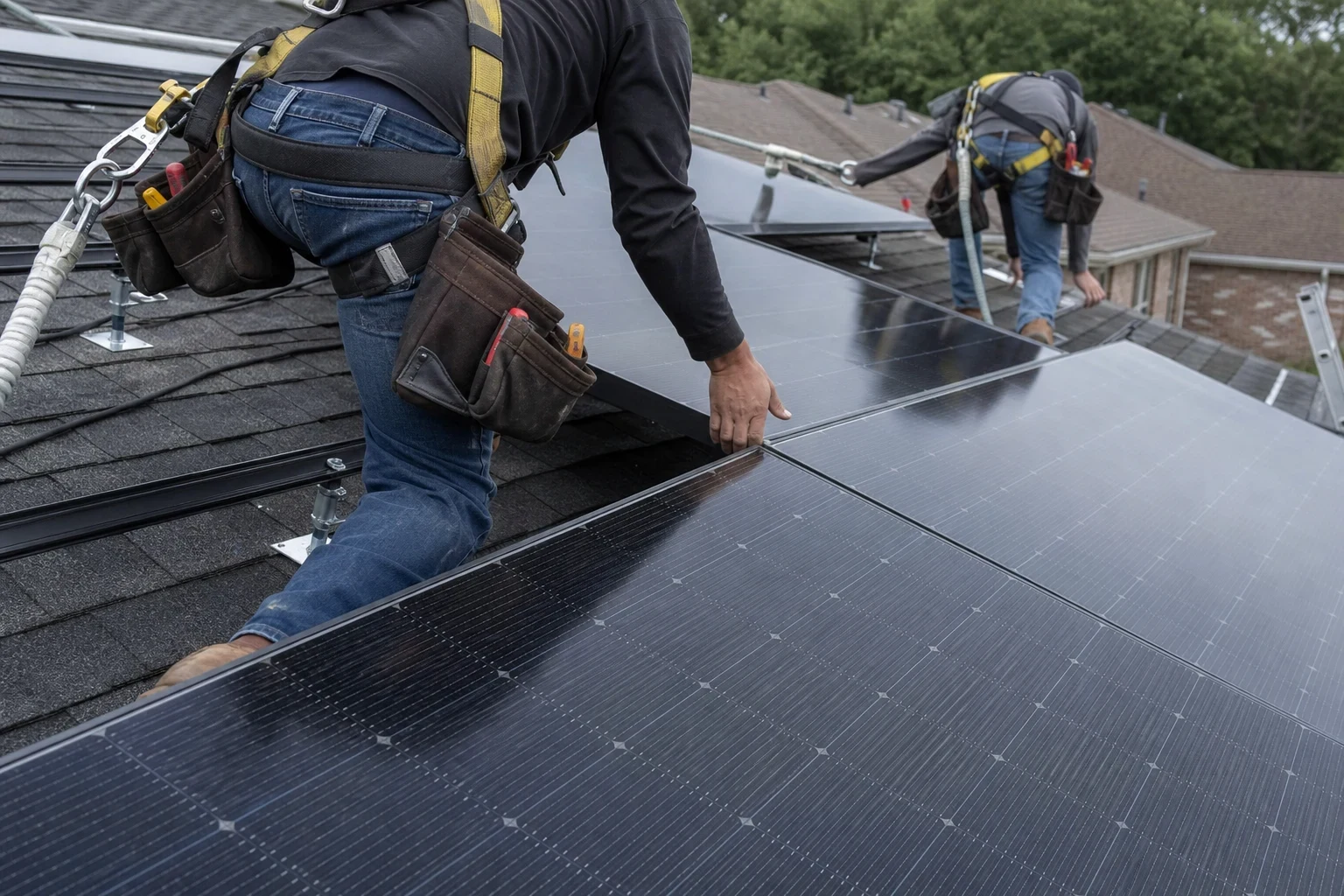
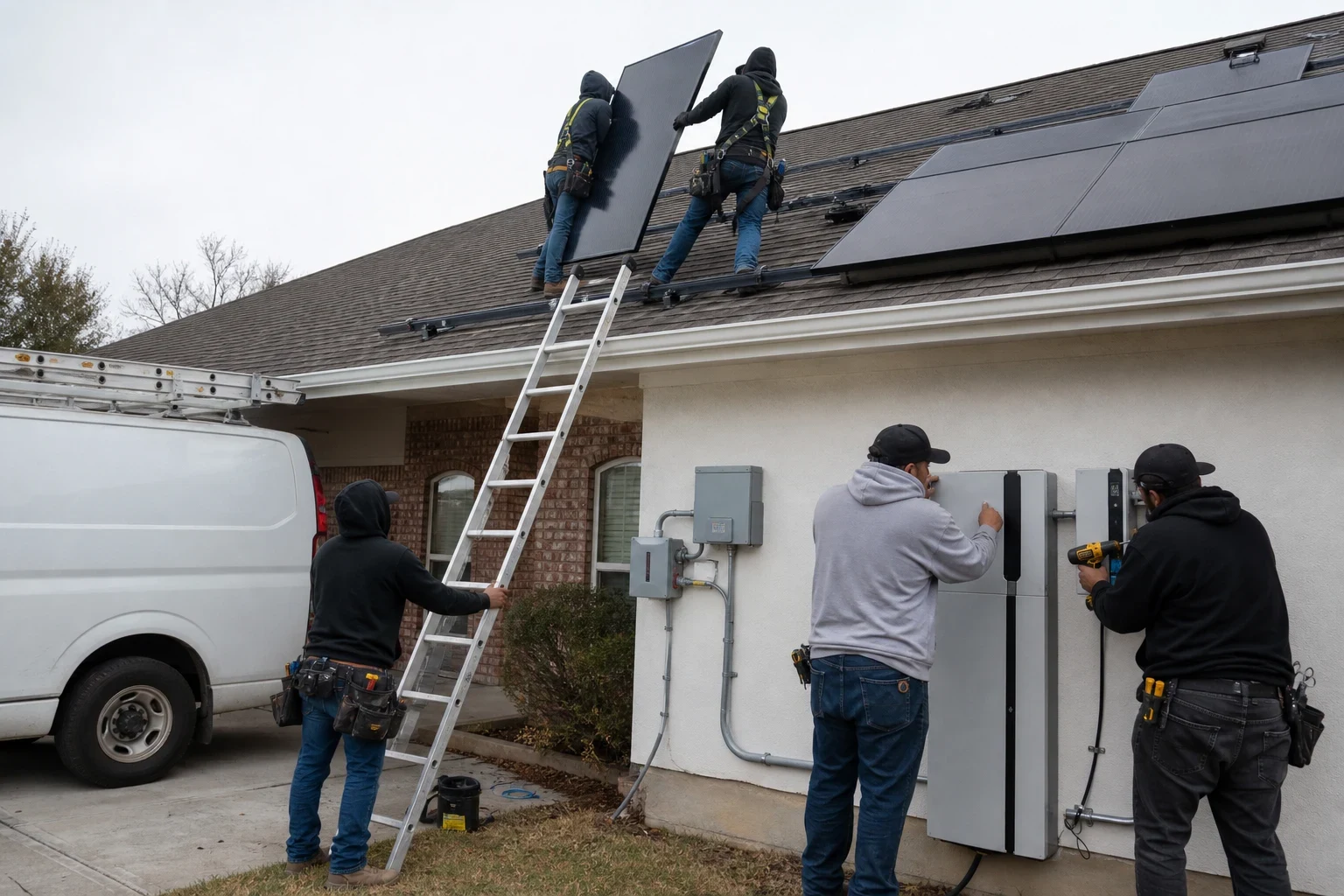
Solar Panel Installation
New rooftop solar designed from a year of your usage, mounted into the rafters with flashed hardware, and permitted, inspected and connected to the grid.
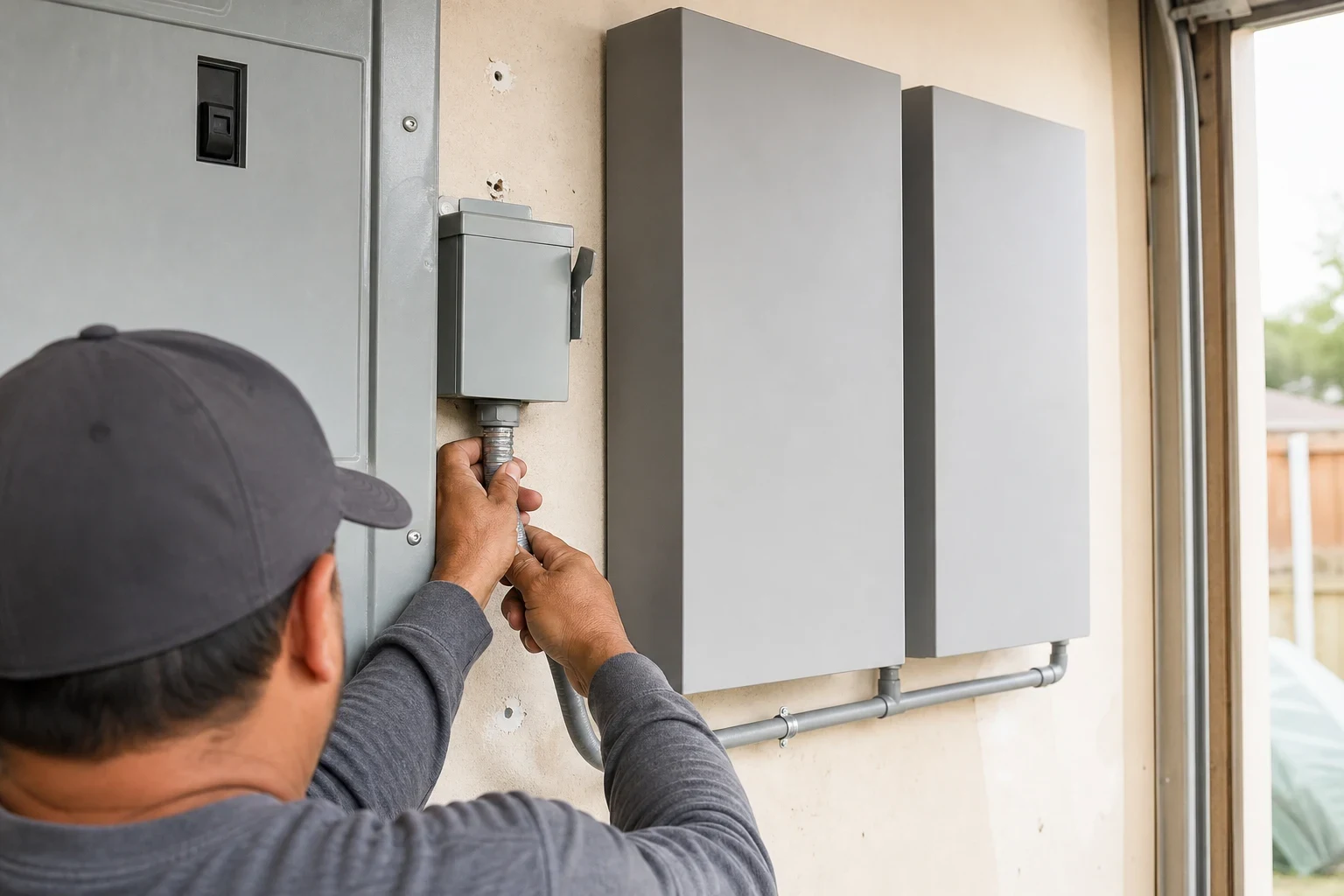
Battery Storage
Home batteries sized to the circuits you actually need in an outage, added to new or existing solar, with a straight answer on fixing an older unit.
Solar Repair
We trace low or zero production to the failed part, whether that's an inverter, connector, panel or wire, and fix that part instead of swapping out the whole system.
Panel Cleaning
Soft-brush, purified-water cleaning that removes dust, pollen and droppings from your panels, with a look at glass, frames and wiring while we're up there.
Roof-Mounted Solar
Racking, flashing and attachments for solar on your roof, plus repair of loose or leaking mounts on arrays that are already up.
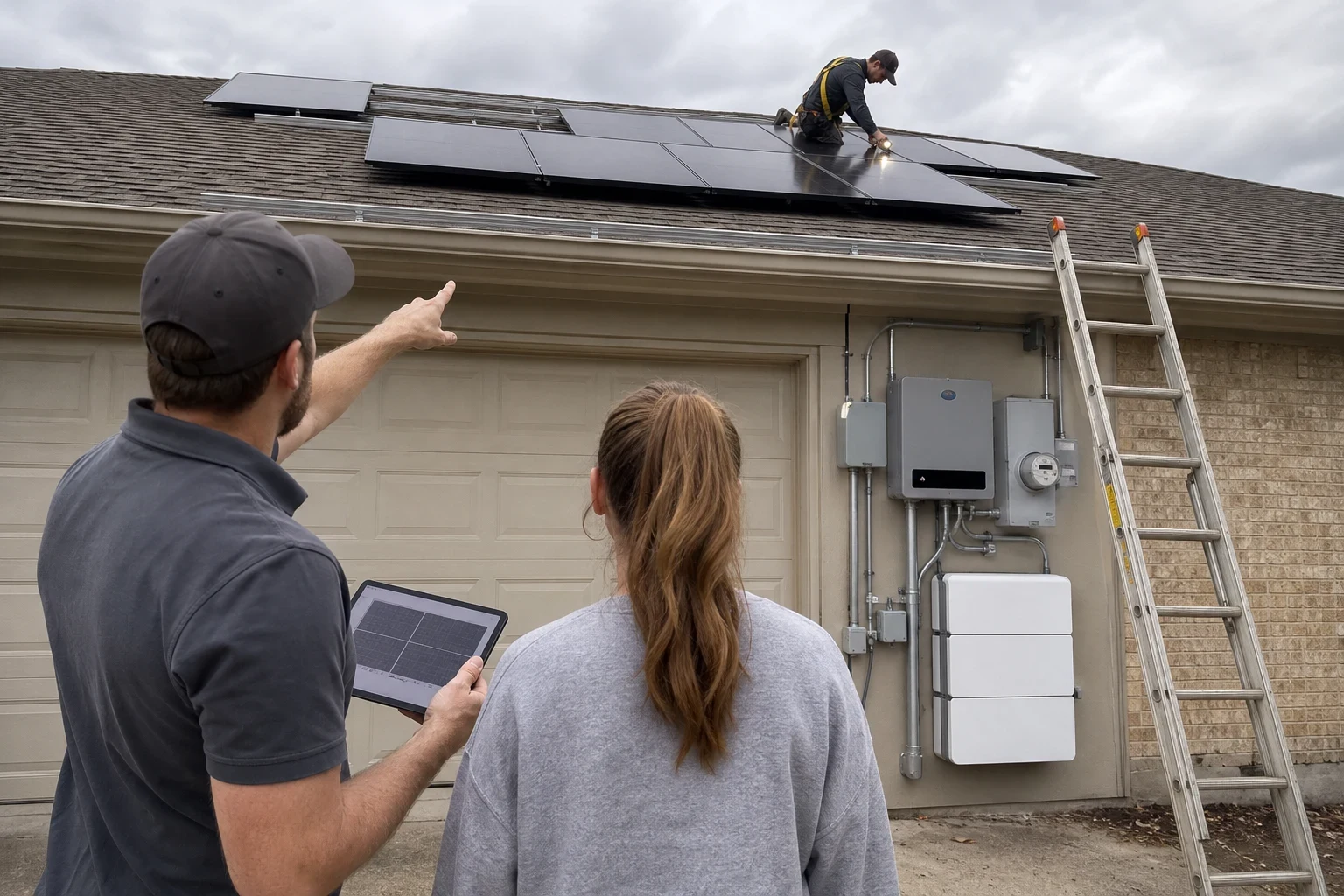
Why Homeowners Call Us First
A solar system is a chain of parts, and one weak link can drag down the whole array. We find that link and price the fix first, ahead of any talk about new equipment.
- We diagnose, then quote
- A drop in production can come from a failed microinverter, a corroded MC4 connector, a tripped breaker or a shaded string. We test at the panel, the inverter and the meter so the quote matches the real cause.
- Repair when it makes sense
- If one optimizer or one connector is bad, we swap that part. New panels or a new string inverter come up only when the numbers show it: repeated failures, discontinued parts, or hardware near the end of its rated life.
- Photos of what we found
- You see the cracked cell, the burnt connector or the loose conduit fitting yourself. Pictures make it easy to judge our recommendation, or to get a second opinion.
- Written, line-item estimates
- Parts, labor, permits and interconnection steps are listed separately. You know what each piece costs up front, and nothing moves ahead until you agree.
- Careful work on your roof
- We seal every penetration with flashing rated for the mount, run wiring in conduit or clipped under the array, and leave the work area clean when we go.
How a Job Runs
Repairs and new installs follow the same order: look first, explain, then do the work.
- 1
Phone conversation
Tell us what you are seeing: a red inverter light, a monitoring app showing zero, a bill that crept up. We ask about system age and equipment brand, then set a visit.
- 2
On-site inspection
We check production at the inverter, test strings and connectors, look for hot spots and physical damage, and inspect the racking and roof penetrations. For new systems, we measure the roof and review your electric bills.
- 3
Recommendation and estimate
You get photos, a plain explanation of the cause and a line-item estimate. If repair is the better path, we say so. If replacement is, we explain why.
- 4
Permits and the work
We pull permits where the job requires them, schedule the work, and coordinate the inspection and utility approval on new installs and battery additions.
- 5
Testing and handoff
We confirm output at the inverter and in your monitoring, walk you through what changed, and clean up on the way out.
Towns We Cover
Our base is Addison, TX, and we work on homes throughout the north Dallas suburbs, among them Carrollton, Farmers Branch, Plano, Richardson, The Colony and Coppell. University Park, Highland Park, Irving and Garland are on our list too.
- Addison
- Carrollton
- Farmers Branch
- Plano
- Richardson
- The Colony
- Coppell
- University Park
- Highland Park
- Irving
- Garland
Don't see your town? Ask us on the call, and we will give you a clear yes or no on whether we can get to you.
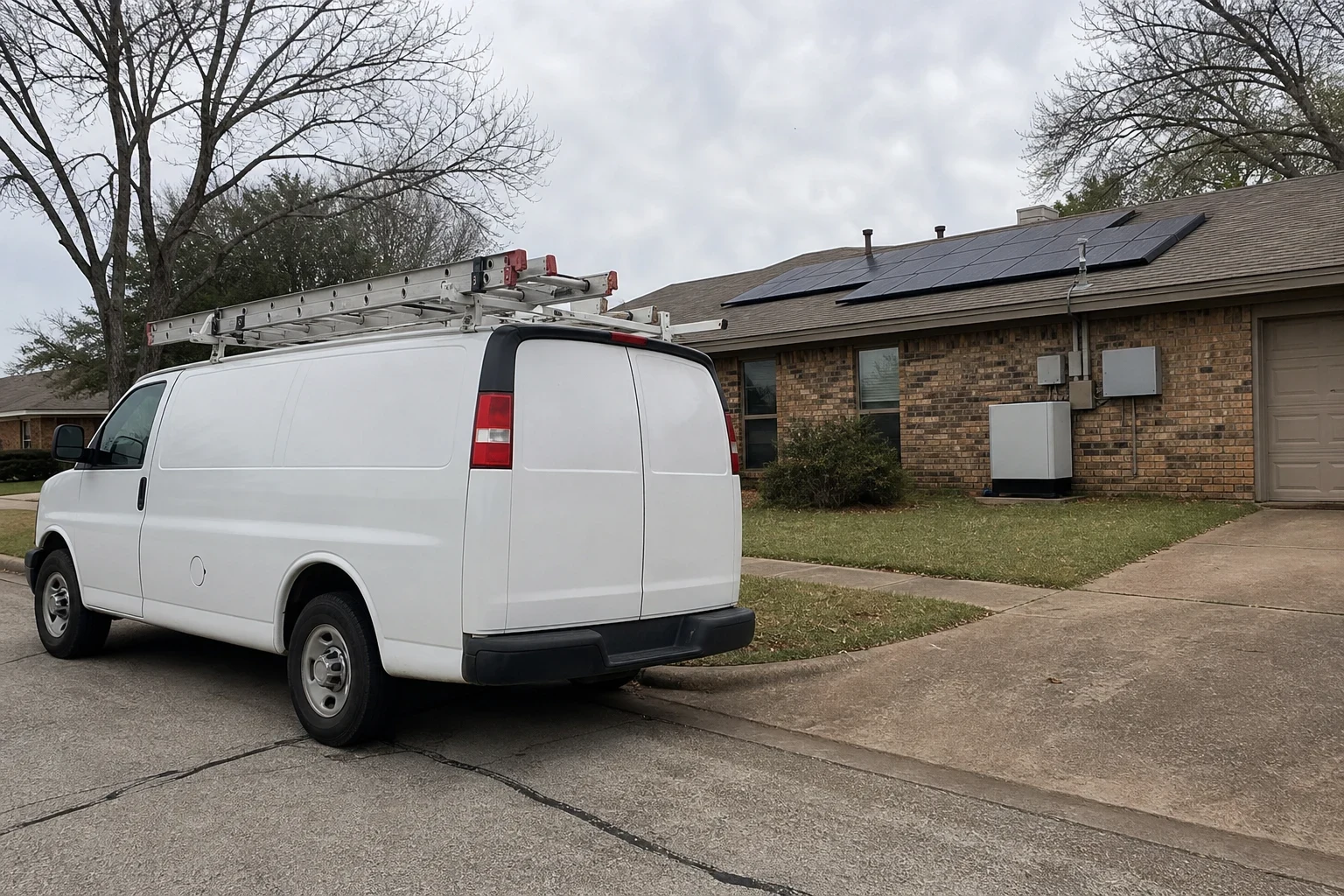
What Drives the Cost of a Solar Job
We price each job from what we find at your home, not from a preset bundle. A fix can be a single part and an hour on site. A new array depends on your household's power use and what your roof can hold.
Once we have seen your home and system, you get a written estimate, delivered by phone or face to face. We order nothing until you sign off.
- How big the system is
- Your annual electricity use sets the panel count and inverter capacity. Each added kilowatt brings more modules, racking and wire.
- Roof shape and reach
- Steep slopes, several roof faces and second-story eaves call for more setup time and fall protection. One open south- or west-facing plane is the simplest case.
- The equipment you pick
- String inverters, microinverters and optimizers differ in price and in how they handle partial shade. The type and size of battery shift the total as well.
- State of the existing system
- For repairs, cost turns on whether one part failed or the problem runs through the array, such as moisture inside several junction boxes.
- Permits and grid hookup
- New arrays and added batteries need a city permit, an inspection and the utility's approval before they can send power to the grid. An electrical panel upgrade, if required, adds to the job.
A Solar Company That Starts With What You Have
Solar Installation Addison works on residential systems only: putting new arrays on roofs, adding batteries, keeping panels clean and fixing systems that have stopped performing. Many of our calls come from homeowners whose original installer is no longer around, and who were told the only answer was a new system.
Often it is not. A single failed microinverter, a cracked MC4 connector or a breaker that trips in summer heat can look like a dead array from the ground. We trace the fault, show you what it is and fix that part. When panels are delaminating, inverters are discontinued or the system was undersized to begin with, we tell you that too, and we show the math.
- In business
- In business 5 years
- Warranty
- 10-year workmanship warranty on solar
- Certifications
- Over 40 solar certificates and licenses
What Homeowners Ask Us
Something not covered here? (972) 435-0476
My system stopped making power. Are the panels shot?
Usually not. A drop in output tends to trace back to the inverter, a connector, a tripped breaker or a monitoring error rather than the panels themselves. We test until we find the cause, then tell you if a repair will restore production or if new equipment is the better use of your money.
How do you choose between a repair and a replacement?
We look at the cost of the fix, the age of the equipment and whether the parts are still made. A repair makes sense when the rest of the system is in good shape. Replacement makes sense when failures keep repeating, parts are no longer available, or several panels are cracked, browned or delaminating.
Do you work on systems another company put in?
Yes. We service most common panel, inverter and optimizer brands regardless of the original installer. We start by documenting what is on your roof so you have a clear record of the equipment.
How is your work covered?
We back our work with a 10-year workmanship warranty on solar. Your panels, inverters and batteries also carry their own manufacturer warranties, and we can sort out which one applies to a given problem.
Is a battery worth adding to my system?
It depends on what you want from it. A battery keeps the lights on in an outage and lets you use more of your own solar at night, which matters more when your plan pays little for power you send back. We review your usage and plan before recommending a size, or recommending you pass on it.
Will panels damage my roof?
Every mount is fastened into a rafter and flashed so water flows around it rather than into the roof. We check the roof before we install, and if it is near the end of its life, we tell you so that work can happen before the panels go on.
How often should my panels be cleaned?
Dry, dusty stretches and heavy pollen seasons can leave a film on the glass that rain doesn't remove. Many homeowners schedule a cleaning once or twice a year. We use soft brushes and purified water, which keeps the glass and its coating free of scratches and spotting.
Find Out What Your System Really Needs
Tell us what you are seeing and we will set up a visit. You get the cause, the options and a written estimate, and no work starts until you say yes.