ServicesBattery Storage
Battery Storage in Addison, TX
We install home batteries that store your solar production and carry your essential circuits through an outage. Before we quote anything new, we check what you already have, because many existing solar systems can take a battery without replacing the inverter or the panels.
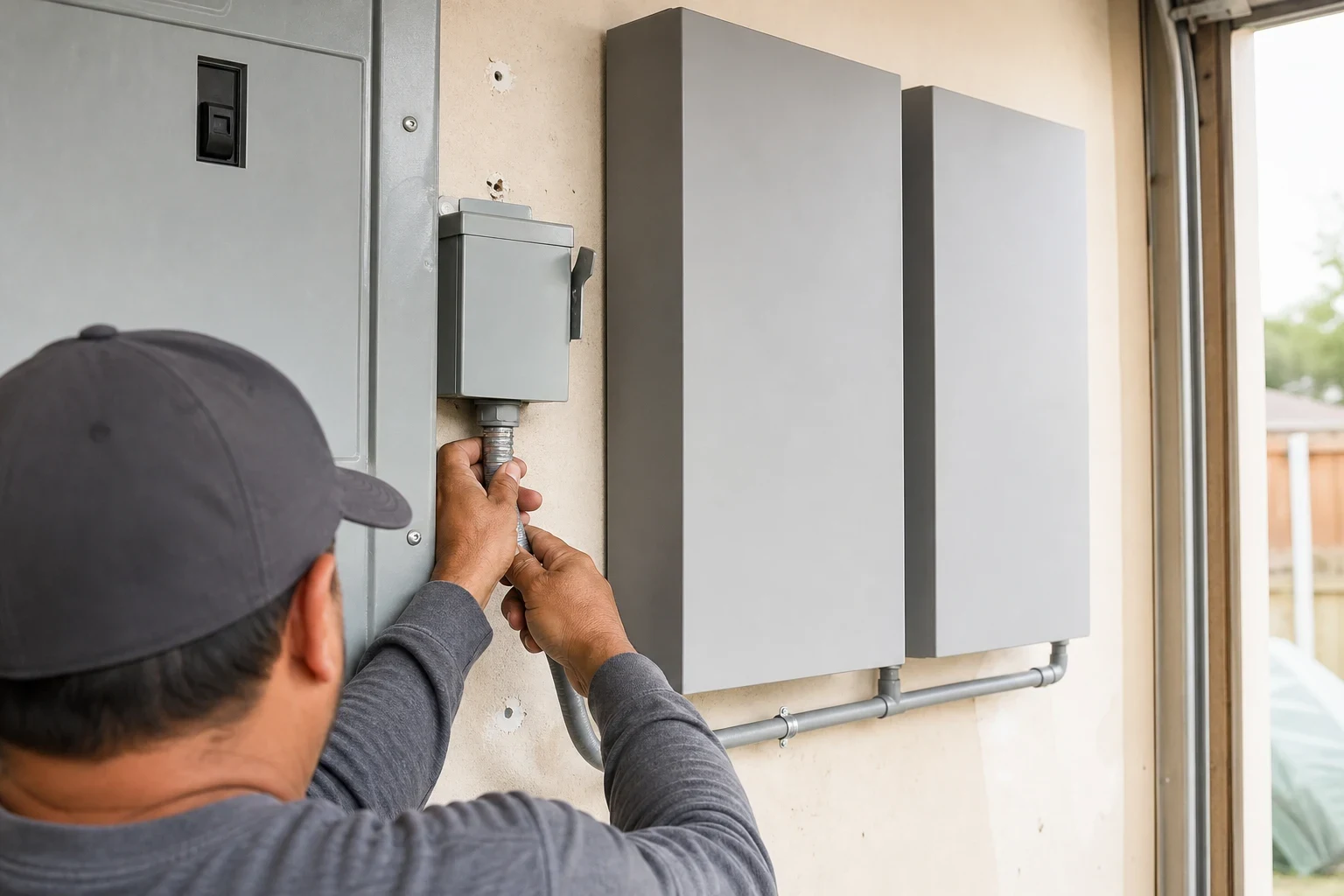
What a Home Battery Does and When It Pays Off
A battery stores energy your panels make during the day, or energy pulled from the grid, and releases it later. Most systems we install use lithium iron phosphate (LFP) cells, which tolerate heat better and are less prone to thermal runaway than older lithium chemistries. A battery management system (BMS) inside the cabinet watches each cell's voltage and temperature and shuts things down before damage happens.
A battery makes the most sense when outages are your main worry, or when your retail electricity plan pays little for the power your panels send back to the grid. If neither applies, we will tell you that plainly. Sometimes the better spend is fixing an underperforming array first, which is work we cover under solar repair.
What the Battery Job Includes
- Load review and sizing
- We look at your past usage and list the circuits you want backed up, such as the refrigerator, well pump, lights, internet and a gas furnace blower. Sizing to those loads keeps you from paying for capacity you will not use.
- Compatibility check on existing solar
- We read the model numbers on your current inverter and look at how the array is wired. That tells us whether an AC-coupled battery can be added alongside it or whether a hybrid inverter is needed.
- Backup gateway and critical loads panel
- The gateway or automatic transfer switch disconnects your home from the grid during an outage so the battery never back-feeds the utility lines. Where whole-home backup is not practical, we move the chosen circuits to a separate critical loads panel.
- Mounting with heat and clearance in mind
- We place the cabinet where it meets fire code spacing and stays as cool as possible, often a shaded exterior wall or a garage wall with impact protection from vehicles. Heat shortens cell life, so location matters as much as the battery itself.
- Permits, inspection and commissioning
- We pull the electrical permit, schedule the inspection and handle the utility paperwork. After approval we set the operating mode, test a simulated outage and show you the monitoring app.
When a Home Battery Makes Sense
Outages cut off the basics
When a summer storm or winter freeze knocks out the grid, a battery keeps your fridge, lights and internet on. Solar panels by themselves turn off during an outage for safety.
Most of your solar goes to the grid
Panels peak around midday, often when the house is empty. If your plan pays little for exported power, saving it for the evening gets more out of the system you already have.
Someone in the home depends on power
A home office, medical equipment or a sump pump all make a strong case for keeping stored energy on hand.
Your current battery is fading
Shorter run times, BMS fault codes or a unit that drops offline in the heat may trace to a dead fan, a loose communication cable or a firmware problem. Those can often be fixed before replacing the battery comes up.
How a Battery Installation Runs
- 1
Phone conversation and site visit
We start by phone, then visit to photograph your main panel, meter and inverter and measure the wall where the battery would go. You get a written estimate with each part listed.
- 2
Design and permit
We draw the one-line electrical diagram, apply for the electrical permit and file the utility interconnection update. Most of the waiting happens here, not on install day.
- 3
Install day
Power to your home is off for part of the day while we mount the battery, set the gateway and land the conductors in the panel. We tell you the shutoff window ahead of time and clean up the conduit offcuts and packaging before we leave.
- 4
Inspection and handoff
After the city inspection passes, we commission the system, run a backup test and walk you through the settings for backup reserve and time-of-use operation.
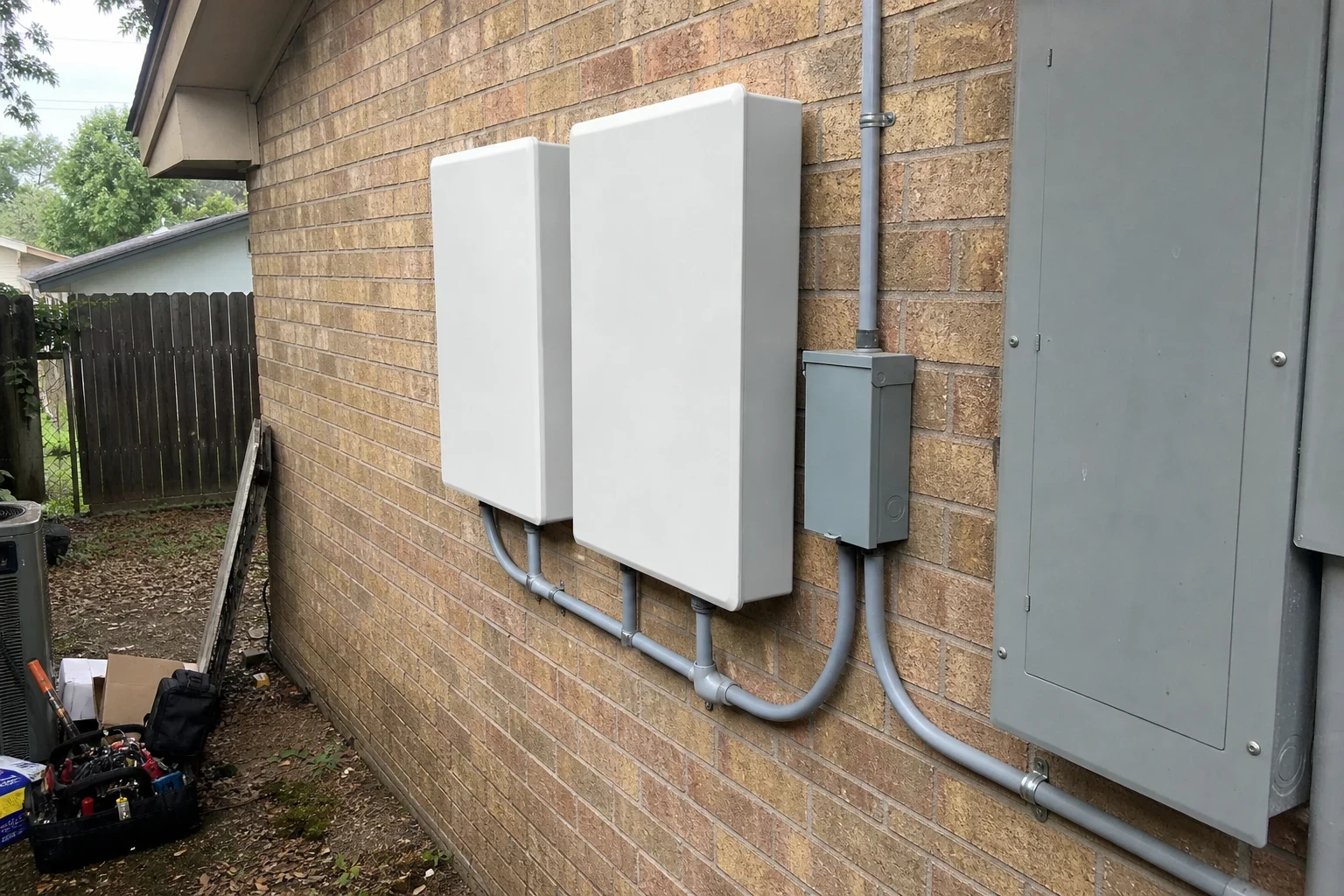
What Moves the Price of Battery Storage
Battery cost depends less on brand names and more on how much energy you want stored and how your home's electrical system is set up. We list each part and labor item in the estimate so you can see where the money goes. If a cheaper path exists, such as keeping your current inverter, we say so.
- Storage capacity
- Capacity is measured in kilowatt-hours. Backing up a few essential circuits takes far less than running central air through the night, and that difference drives most of the price.
- Existing inverter and wiring
- An inverter that can work with an AC-coupled battery keeps costs down. An older string inverter that cannot may need a hybrid inverter in its place.
- Main panel condition
- A full or undersized main panel may need a critical loads subpanel or other electrical upgrades to accept the battery breaker.
- Mounting location
- A short run from the main panel to a nearby wall costs less than trenching conduit or adding bollards and fire-rated clearances.
Home Battery Questions We Hear
Something not covered here? (972) 435-0476
Can a battery be added to the solar I already have?
Usually, yes. Many existing systems can accept an AC-coupled battery that works next to your current inverter. We look at the inverter model and the panel wiring before recommending any new equipment.
How long will a battery run my home during an outage?
It comes down to the battery's kilowatt-hours and what you run on it. Powering only the fridge, lights and internet stretches it much further than running central air. When your solar is working, it also recharges the battery during the day.
Does Texas heat hurt home batteries?
Extended heat speeds up cell aging, so we favor LFP chemistry and mounting spots that are shaded and well ventilated. The BMS also cuts back charging when cells get hot, which protects them but trims some output on the hottest afternoons.
My battery is showing a fault code. Do I need a new one?
Not necessarily. A failed cooling fan, a faulty communication cable between the battery and inverter, or outdated firmware often triggers the fault. We find the cause first and only recommend replacing it if the cells have lost too much capacity to keep.
Does a home battery need a permit?
Yes. Installing a battery is electrical work, which means a permit and an inspection, and the utility must be notified that your system has changed. We take care of both.
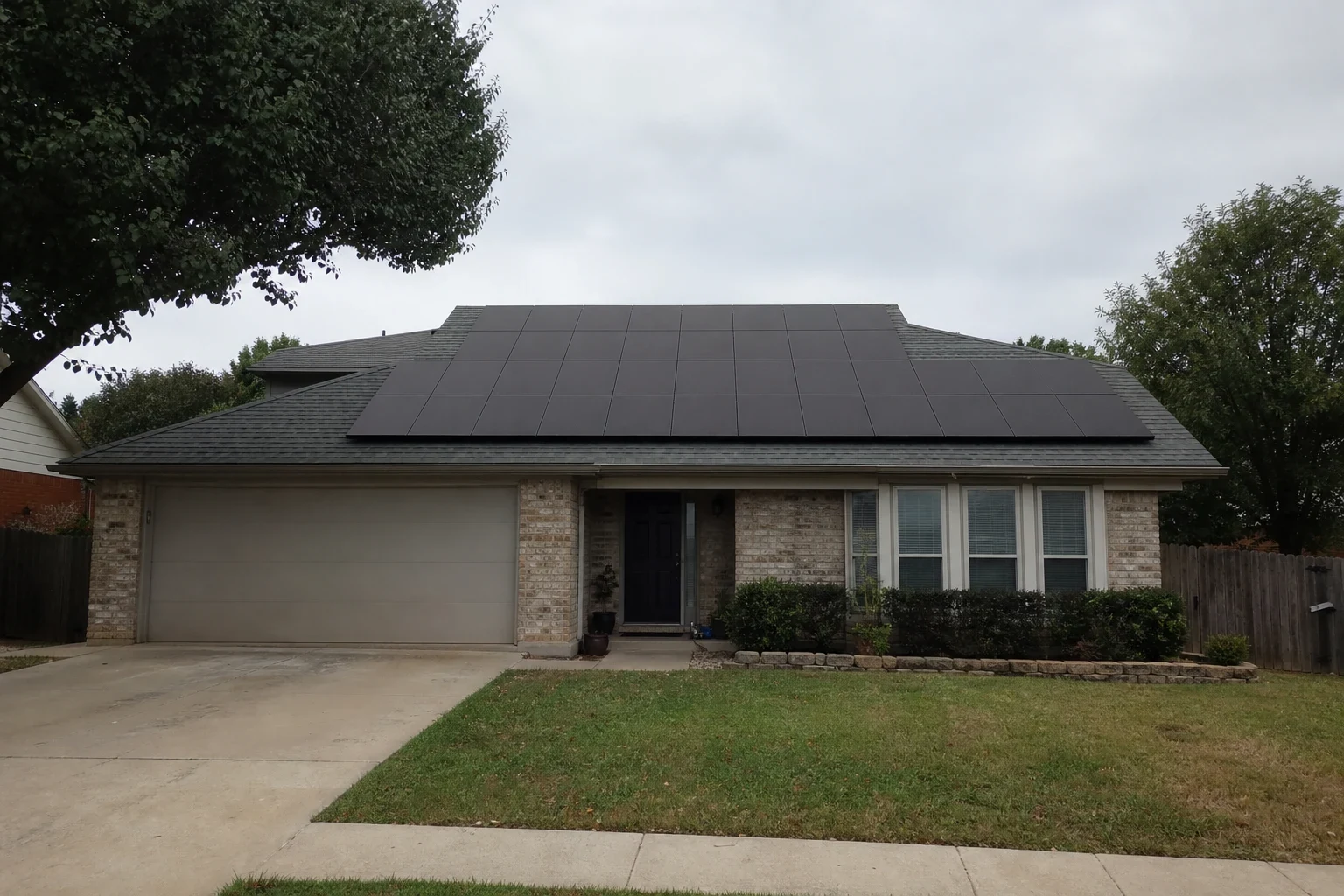
Find Out What Battery Your Home Needs
Tell us which circuits you want running in an outage and what solar equipment you have now. We will explain whether a battery fits, how to size it, and whether your current inverter can stay.