ServicesSolar Panel Installation
Solar Panel Installation in Addison, TX
We design each system from a year of your electric bills and the roof faces that actually get sun. Then we mount it into the rafters, wire it to code, pull the permit and handle utility approval, so you see exactly what you are buying while it is still on paper.
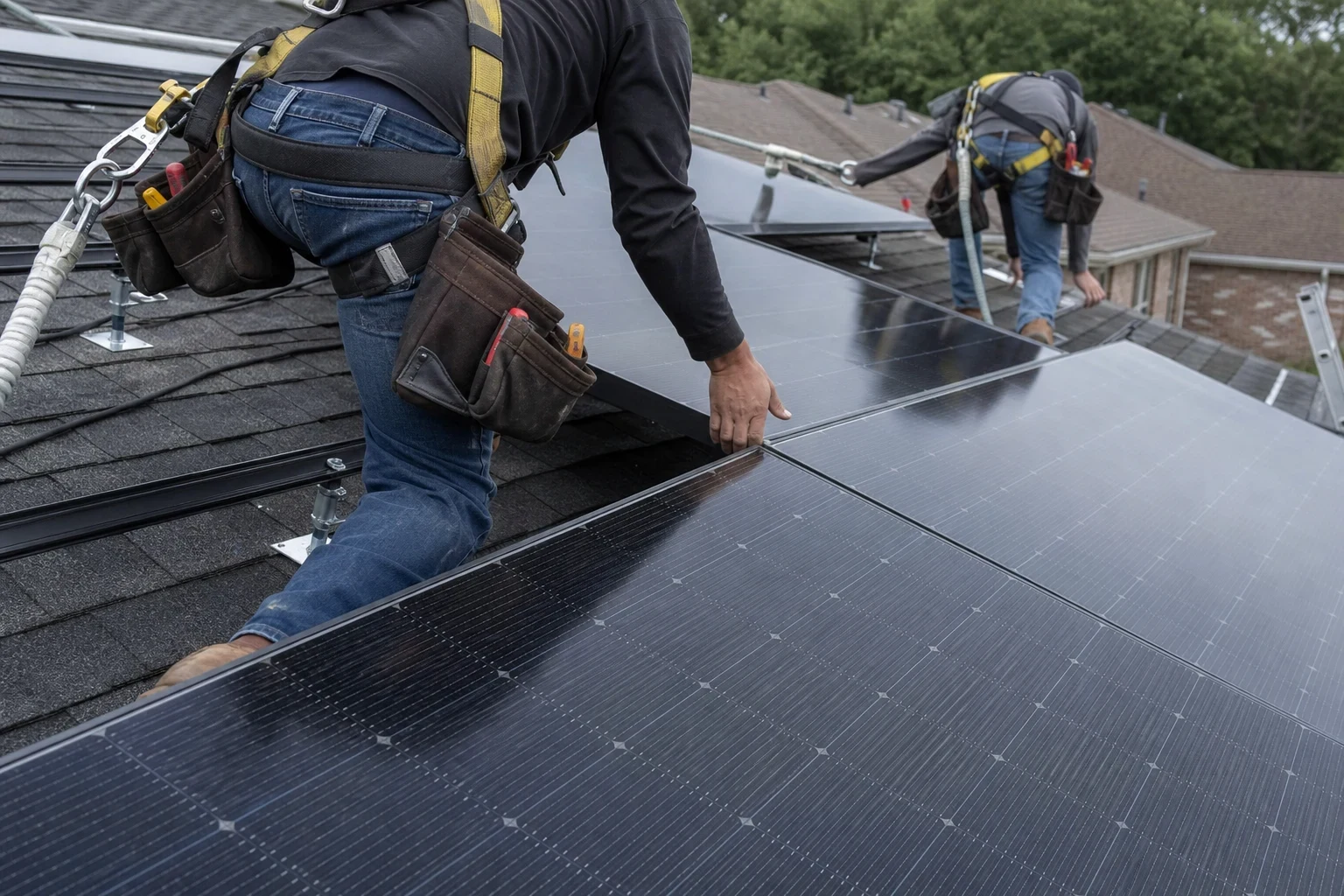
What a new solar installation includes, and when it fits
A solar installation puts modules on your home, runs their output through an inverter to your main electrical panel, and ties the system to the grid. Your home uses its own power first and sends the surplus back. We size the array from twelve months of usage, not from a standard package, because an oversized system costs more than it ever returns.
If you already have panels that are underperforming, a new install may not be the answer. A failed microinverter, a corroded MC4 connector or a tripped breaker is often the real cause, and that is our solar repair work. We check that first. When an aging string inverter keeps failing, or the modules show delamination and cracked cells, we explain why replacement makes more sense and show you what we found.
We also look at the roof ahead of any mounting. Panels stay up for decades, so if your shingles are near the end of their life, we tell you up front so you can have a roofer handle it first.
What's part of the job
Roof and shading review
We record the slope and direction of every roof plane and note shade cast by trees, chimneys and nearby buildings. The array usually goes on south- and west-facing planes, and shaded planes are skipped instead of being used to pad the panel count.
Design and equipment selection
We plan the module layout and pick a string inverter, microinverters or power optimizers to suit your shade and roof. You hear the trade-off plainly: microinverters stop one shaded panel from pulling down the others, and a string inverter puts fewer parts on the roof.
Racking and flashed mounts
Every mount is lagged into a rafter rather than only the decking, then sealed beneath flashing that sheds water like your shingles. Aluminum rails connect the mounts and keep the modules at an even height so air can move underneath.
Wiring, shutoffs and rapid shutdown
We run conduit from the array, set the AC disconnect and breaker, and install rapid shutdown equipment so firefighters can cut power to the roof. If your main panel can't take the new breaker, you'll know before any work begins.
Permit, inspection and utility approval
We obtain the building permit, meet with the inspector and take care of the utility's interconnection paperwork. Your system stays switched off until the utility gives permission to operate.
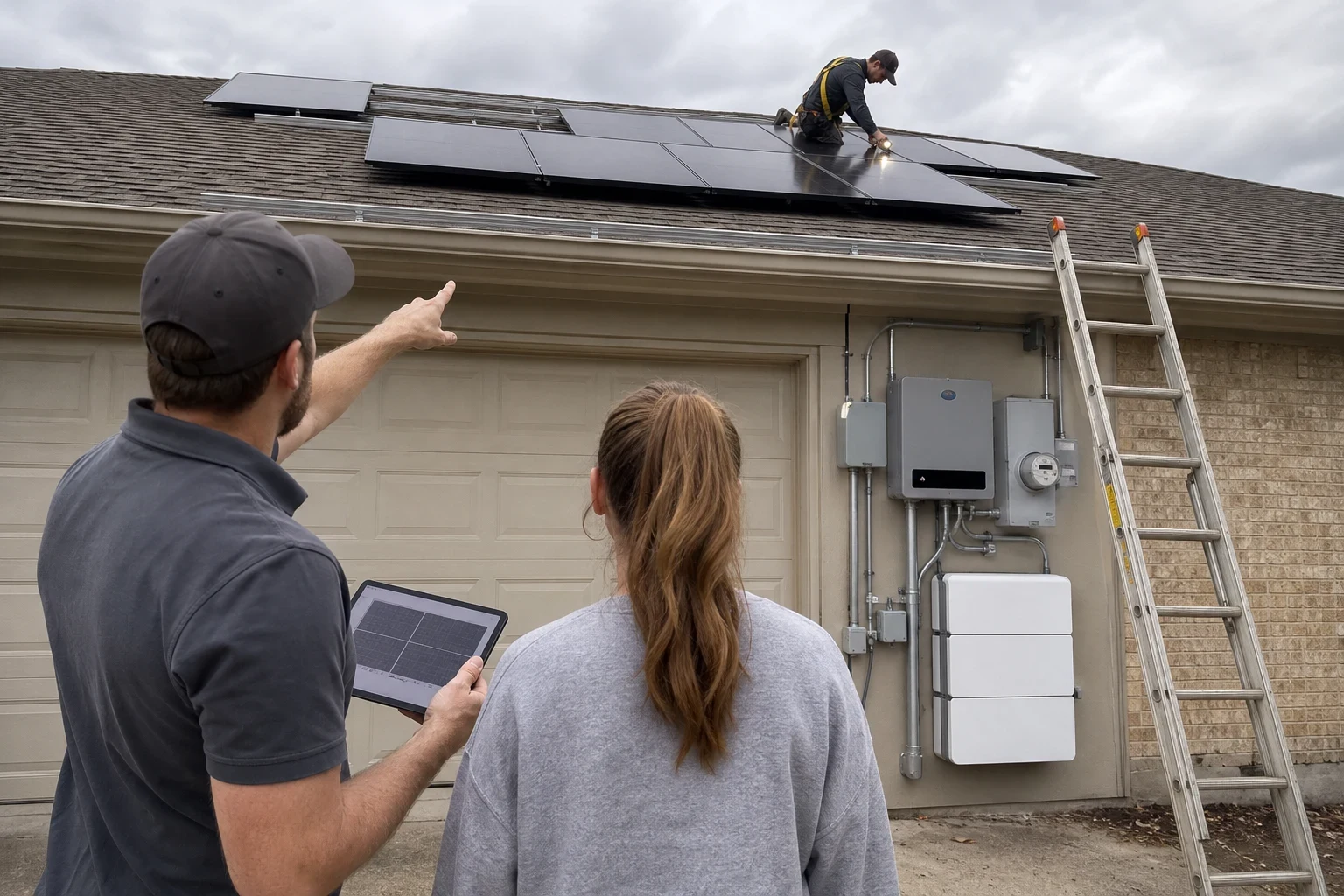
Signs a new solar system makes sense for your home
- Summer bills dominate your year
- North Texas air conditioning loads push July and August bills far above spring. Solar production peaks in those same long, sunny months.
- Open south or west roof faces
- Unshaded planes facing south or west give the most kilowatt-hours per panel. A roof that faces mostly north needs a careful look at the production estimate.
- An old system that is past repair
- Repeated string inverter failures, hail-cracked glass across many modules, or browning and delamination point to replacement. We confirm that with testing instead of assuming it.
- You plan to stay put
- Solar pays back over years of lower bills. If you expect to be in your home for a good stretch, the numbers tend to work in your favor.
How an installation runs
- 1
Phone call and bill review
We talk through your usage, roof and goals, including whether you want battery storage now or later. If you have an existing system, we start by asking what it is doing.
- 2
Site visit and written proposal
We measure the roof, check the attic framing and look at your main panel. You get a line-item proposal showing module count, inverter type, expected annual production and any electrical upgrades.
- 3
Permits and approvals
We prepare the plan set for the building permit and file the utility interconnection application. Nothing goes on the roof until the permit is issued.
- 4
Install days
The crew lays out mount locations on the rafters, sets flashed mounts and rails, then lands the modules and runs wiring and conduit. We clear drilling debris and packaging from the roof and yard at the end of each day.
- 5
Inspection and turn-on
After the city inspection and the utility's permission to operate, we commission the system and walk you through the monitoring app so you can see production panel by panel or by string.
What changes the cost
An installation's price comes down to how much power your home uses and how much your roof and electrical service add to the work. Our proposal breaks out every item, so you can see the cost of each piece and change the design before you commit.
- Array size
- Each added kilowatt brings more modules, rails and mounts. Sizing from your real usage keeps you from buying capacity you won't need.
- Roof shape and slope
- One broad plane racks faster than four small ones broken up by hips and valleys. Steep slopes call for added fall protection and more time.
- Type of inverter
- Microinverters and optimizers cost more than one string inverter, but they deal with shade better and let you monitor each panel.
- Room in your main panel
- Under code limits, some older electrical panels can't take a solar breaker. A panel upgrade or a line-side connection adds to the price, and we point it out during the site visit.
- Battery today or down the road
- A battery increases the upfront price. Planning for one now, even if it goes in later, can spare you rewiring in the future.
Questions about installing solar
- Will the panels cause my roof to leak?
- Leaks usually come from mounts that miss the rafter or are sealed only with caulk. We lag every mount into framing and set it under flashing that sheds water like a shingle. We also check the roof's condition first and tell you if it should be replaced before panels go up.
- How long until the system is turned on?
- The work on the roof is the short part. Permit review, the city inspection and the utility's permission to operate take most of the time, and those timelines are set by the city and the utility. We keep you updated at each step.
- What about hail?
- Modules are built with tempered glass and tested against hail impact, but a severe storm can still crack them. Check how your homeowner's policy treats rooftop solar. If panels are damaged, we document what we find with photos and explain the claim process, though your insurer's adjuster makes the coverage decision.
- I already have panels that underperform. Should I replace them?
- Not necessarily. We test the strings, inverter and connectors first, and many systems recover with a repair. If testing shows widespread module degradation or an inverter that is no longer supported, we explain why replacing makes more sense.
- Does Texas heat reduce output?
- Yes, slightly. Panels lose a small percentage of output for each degree above their rated temperature. Mounting on rails with an air gap underneath helps them shed heat, and long summer days still make those months strong producers.
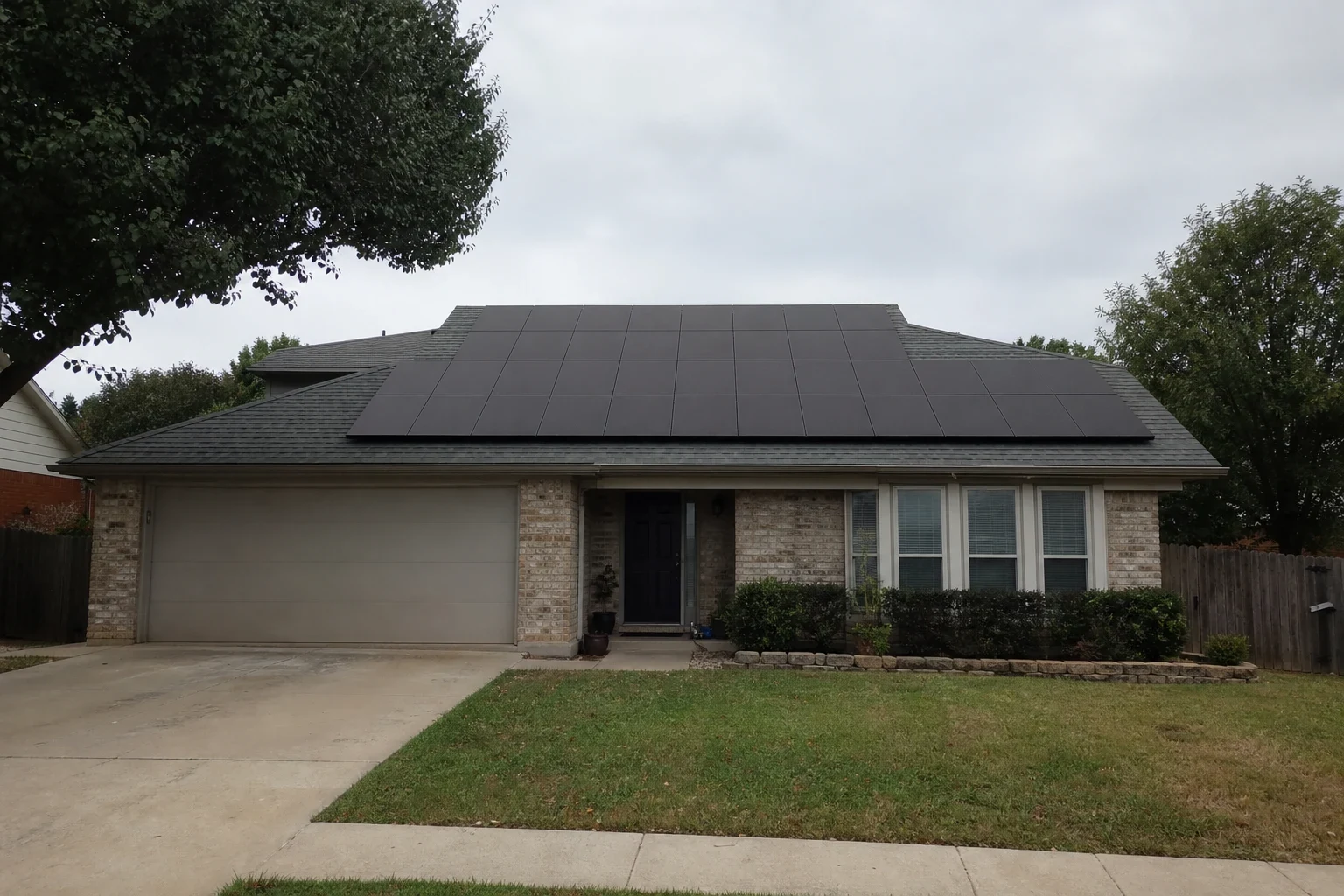
Picture solar on your own roof
Share your bills and a few details about your roof, and we'll walk through the system size that fits and what drives the price. If panels are already up, we'll first look at whether a repair will do.