ServicesSolar Repair
Solar Repair in Addison
When your monitoring app shows a drop, an error code or a flat zero, we find the exact part that failed and fix it. Most production problems come from one inverter, connector or damaged wire, not the whole array, so we repair first and say plainly when replacement makes more sense.
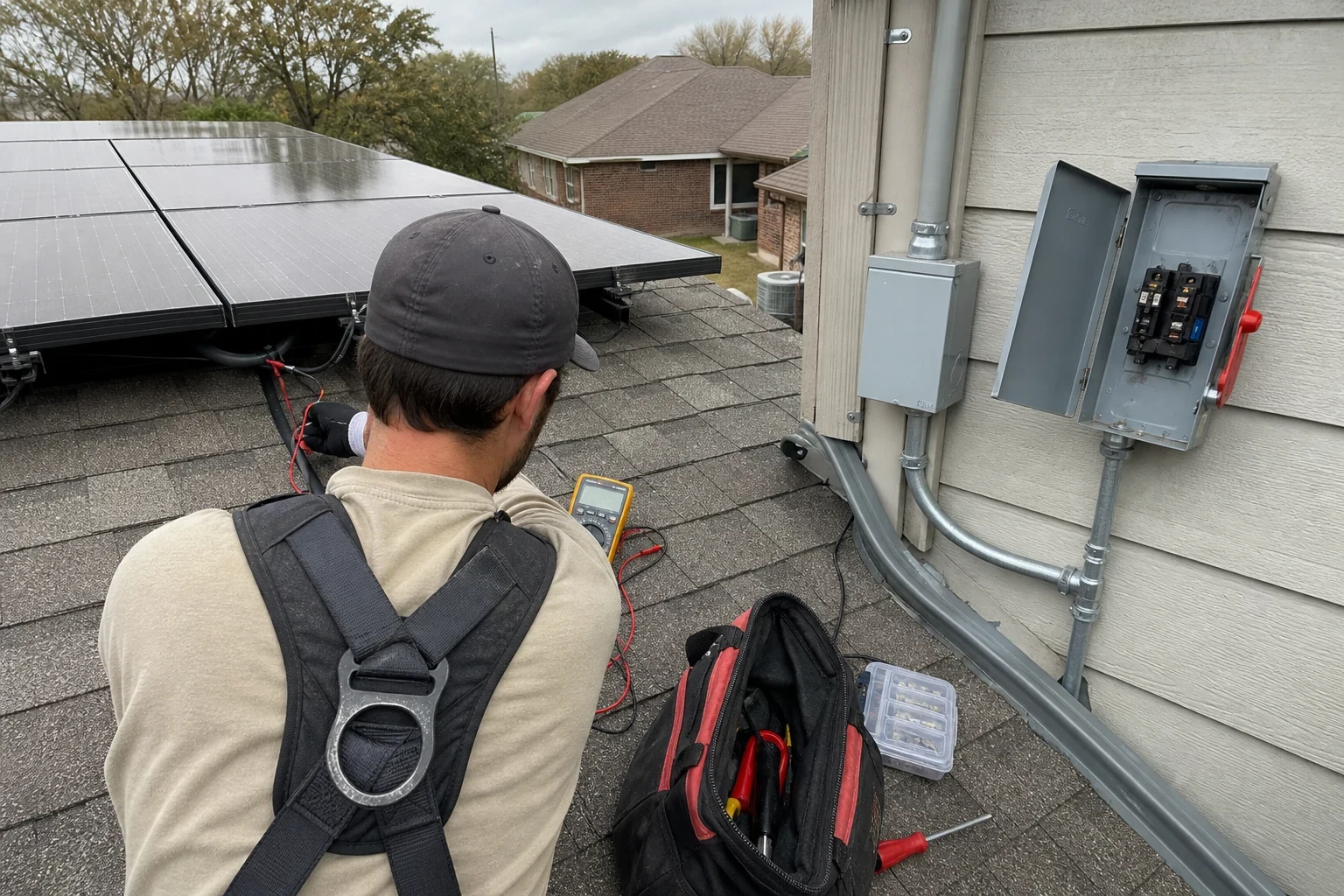
Fixing the part that failed, not the whole system
A solar array is a chain of parts: panels, MC4 connectors, home-run wiring, a disconnect, rapid shutdown hardware and one or more inverters. When output drops, the cause is usually a single weak link in that chain. We test each section until we find it, then repair or swap that component.
Sometimes a new part is the honest answer. A string inverter that is out of production with no compatible substitute, or a panel with delaminated backsheet and burn marks, is not worth patching. In those cases we show you the readings and photos and explain why, so you can decide with the facts in front of you.
We work on systems we installed and on systems other companies put in, including ones whose original installer is no longer around.
What our solar repair covers
Inverter diagnosis and changeout
We read the fault codes on string inverters, microinverters and optimizer systems, check DC input voltage and AC output, and confirm whether the unit itself failed or is reacting to a problem upstream. If it has failed, we install a compatible model.
Connector and wiring repair
Loose or corroded MC4 connectors and chewed wire cause ground faults and arc-fault shutdowns. We cut out damaged sections, install matched connectors and secure loose wire so it no longer rubs on the roof surface or rail edges.
Swapping damaged panels
Hail and flying debris crack glass and cells, which lets moisture in and creates hot spots. We remove the damaged module and install a matching or electrically compatible panel so the string stays balanced.
Monitoring and communication fixes
Sometimes the array is producing fine and only the monitoring gateway has lost its connection. We restore the link so your app reports real numbers again.
Critter guard installation
Squirrels and birds nest under panels and chew the outer jacket off wires. After repairing the damage, we can install mesh guards around the array edge to keep them out.
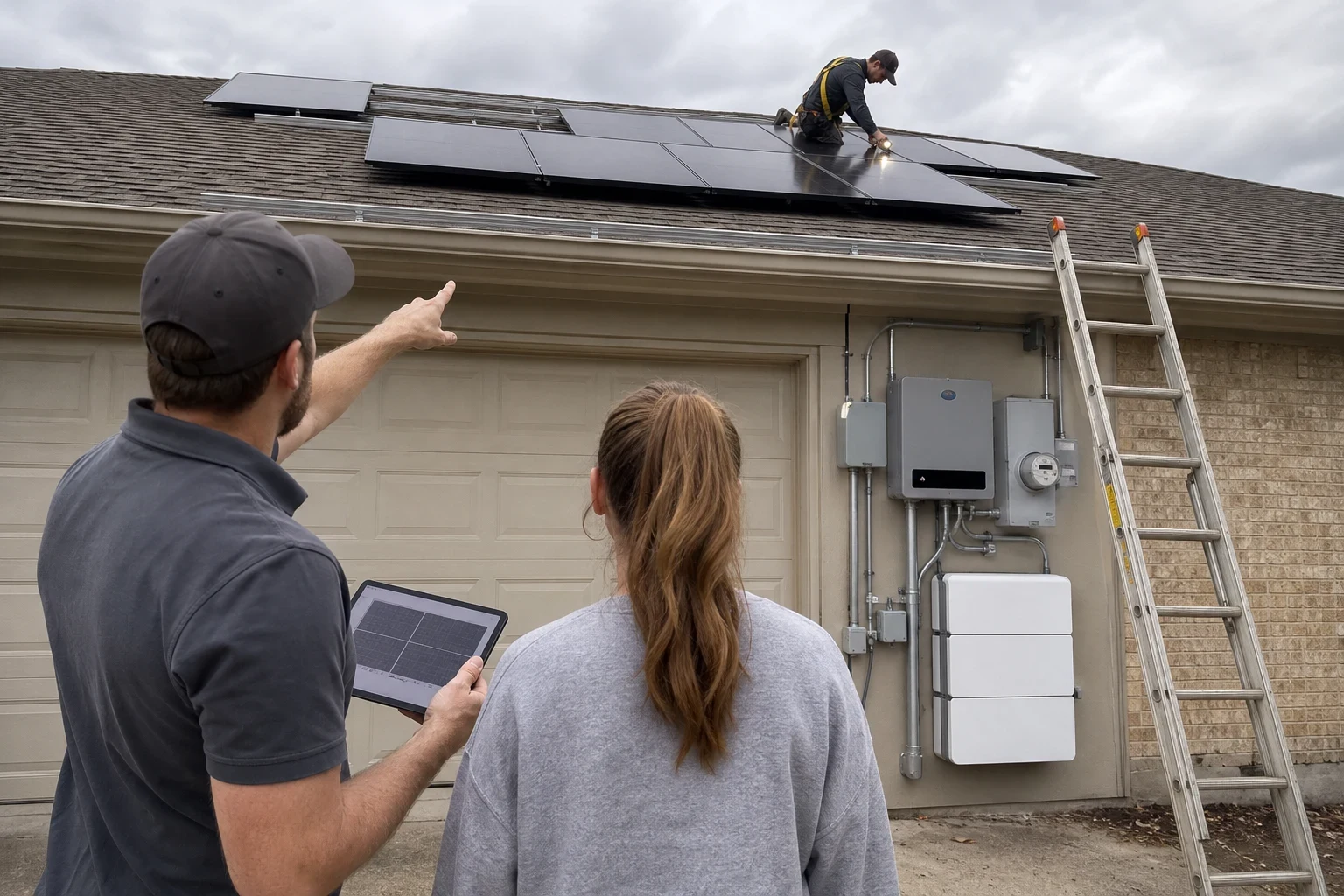
Signs your system needs repair
- Production dropped and stayed down
- A cloudy week lowers output, but a drop that holds through clear days points to a failed string, panel or inverter channel.
- Error lights or fault codes
- A red or amber light on the inverter, or a ground fault or arc fault code in the app, means the system has shut down part or all of its output to protect itself.
- The app shows zero
- Zero output on a sunny afternoon is either a tripped breaker, an open disconnect, a dead inverter or a lost monitoring connection. Each has a different fix.
- Visible panel damage after a storm
- Spiderweb cracks, shattered glass or dents in the frame after a North Texas hailstorm let water reach the cells, and output from that panel will fall over time.
- Dangling wires or nesting debris
- Wire hanging below the panel edge or twigs and droppings under the array usually mean animal activity, and a chewed wire jacket is a fault waiting to happen.
- A higher electric bill with no change in use
- If your utility bill climbs while your habits stay the same, the array may be underproducing without throwing an obvious error.
How a repair visit runs
- 1
Start with a phone call
Tell us what the app or the inverter display shows, when it started and whether there was a storm. Screenshots of your production history help us bring the likely parts.
- 2
Test on site
We check the breaker and disconnect, read inverter logs, measure voltage and current on each string, and use thermal imaging to find hot cells or connectors. That isolates the fault to a specific component.
- 3
Explain what we found
You get photos and readings and a written repair-or-replace recommendation with the parts and labor listed. If a part is still under the manufacturer's equipment warranty, we tell you so.
- 4
Repair and verify
We make the repair, restart the system following its shutdown sequence and confirm production on every string before we leave. If the work requires a permit or utility notice, we handle it.
What sets the cost of a solar repair
A loose connector and a dead string inverter are very different jobs, so we price after we have found the fault. Your written estimate lists each part and the labor before any work starts. These are the things that move the number.
- Which part failed
- Re-terminating a connector is a short job. Swapping an inverter or several panels involves more expensive parts and more time.
- Access to the fault
- A steep roof, a second story or a fault in the middle of the array means removing and reinstalling panels to reach it, which adds labor.
- Parts compatibility
- Older systems may use discontinued inverters or panel models. Finding an electrically matched substitute can take extra sourcing, and occasionally it changes the repair-or-replace math.
- Warranty coverage
- Panels and inverters often carry manufacturer equipment warranties. When a covered part fails, your cost may be limited to labor, and we help you file the claim with the manufacturer.
Solar repair questions
- Can you repair a system another company installed?
- Yes. We work on most common inverter and panel brands regardless of who installed them. If your original installer has closed, we can still diagnose the system and help you pursue any manufacturer warranty on the equipment.
- Is it worth repairing an older solar system?
- Usually. Panels lose output slowly, so a ten-year-old array often has plenty of life left, and the failure is commonly the inverter, which has a shorter lifespan than the panels. We compare the repair cost with the system's remaining output and tell you which way the numbers point.
- Does hail damage mean replacing the whole array?
- Rarely. Hail tends to crack some panels and miss others. We test each module, swap the damaged ones for compatible panels and document everything with photos you can share with your insurance adjuster. The adjuster decides coverage; we supply the evidence.
- Do panels have to come off the roof to fix them?
- Only when the fault is under or between them. Inverter, disconnect and monitoring problems are fixed at ground level or at the equipment wall. Wiring and connector faults under the array require lifting the affected panels and reinstalling them on the existing racking.
- Should I turn my system off if I see a fault code?
- Most systems shut down the affected section on their own. If you see sparking, smell burning or notice melted wire, open the AC disconnect and the solar breaker, stay off the roof, and give us a call.
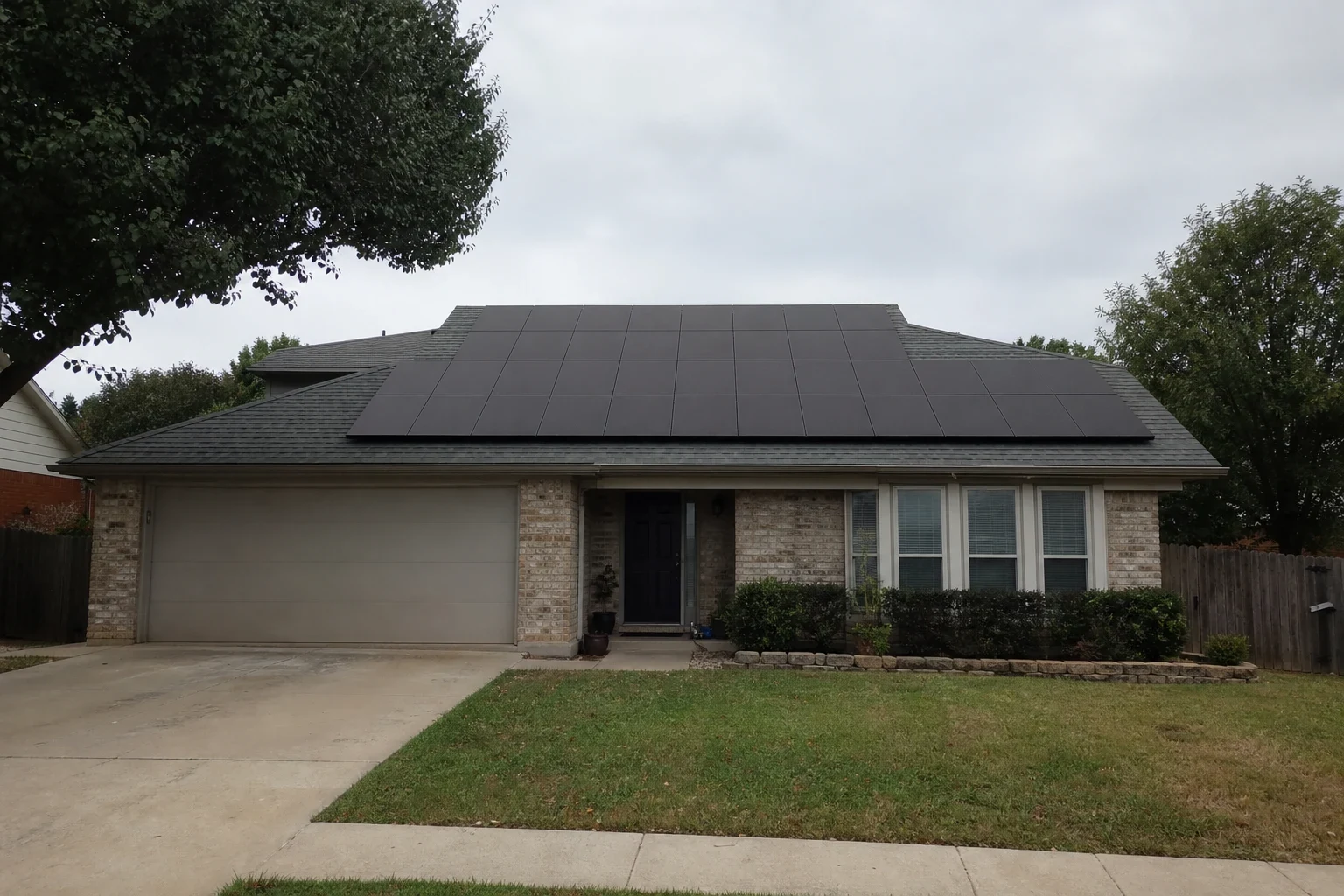
Get your array producing again
Tell us what your monitoring shows and we'll talk through the likely causes and set up a diagnostic visit at your home. If repair makes sense, we repair it; if not, we'll show you why.