ServicesRoof-Mounted Solar
Roof-Mounted Solar in Addison
We design and install roof-mounted solar with every attachment lagged into a rafter and flashed under the shingle course. If you already have panels up, we check the mounts first and fix what can be fixed before anyone talks about pulling the array.
What Roof-Mounted Solar Involves
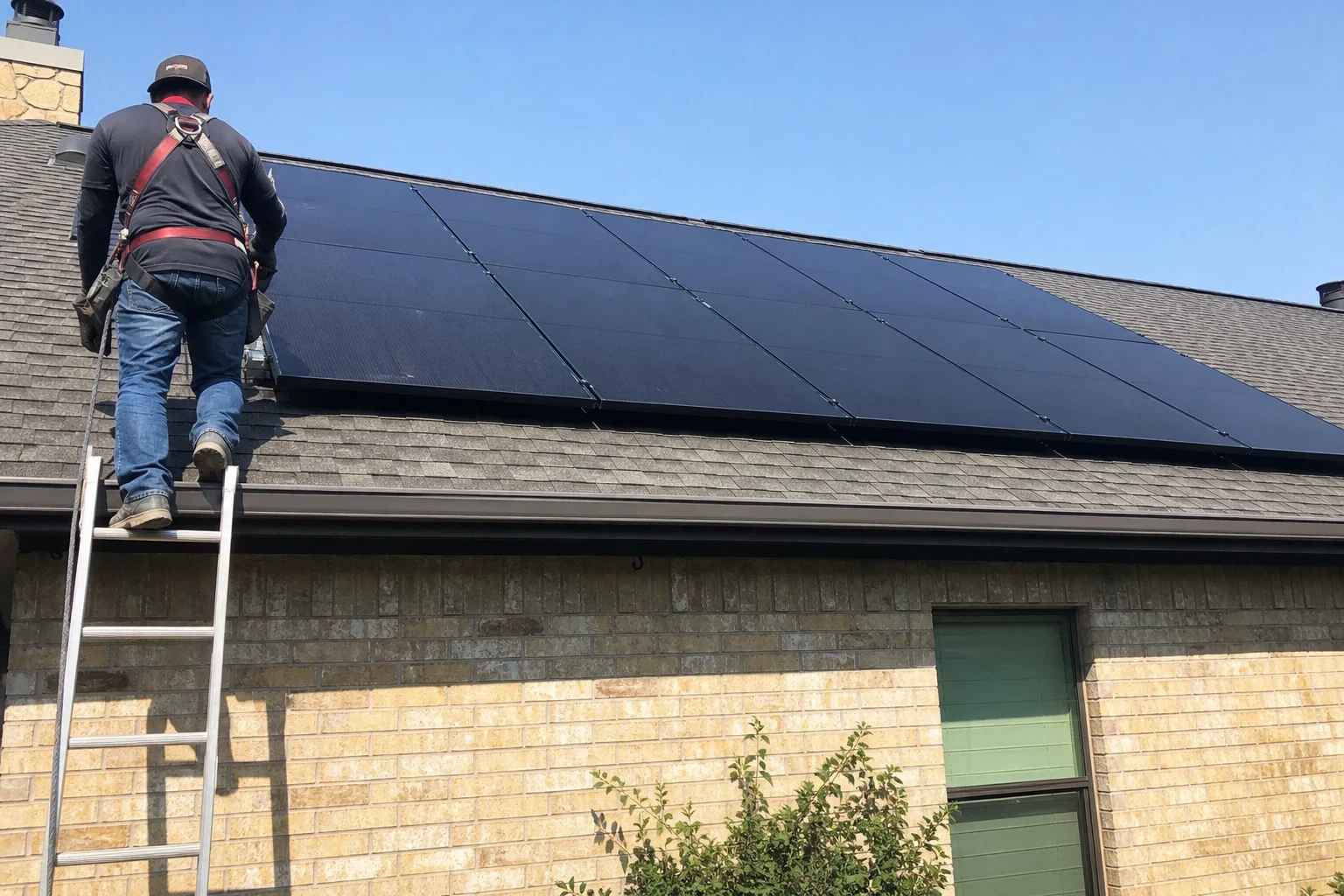
A roof-mounted array is only as good as the hardware holding it down. Each panel sits on aluminum rails, and those rails ride on attachments bolted through the decking into the rafters below. The attachment is where water, wind and heat do their damage, so that is where we spend the most care.
For a new system, we lay out the array around your rafters, vents and roof planes, then size the attachment spacing for wind load. For an existing system, we start by looking at what is there. A loose L-foot, a dried-out sealant bead or a cracked flashing boot is usually a repair, not a reason to tear the whole array off.
Composition shingle is the most common roof we mount on, and we also work with standing seam metal and tile, each with its own attachment style.
What the Work Includes
Rafter location and layout
We find the rafters from the attic or with a stud finder on the decking and mark them before drilling. Lag bolts that miss the rafter and only bite plywood are a leading cause of loose mounts and leaks.
Flashed attachments
On shingle roofs we slide a metal flashing under the course above each mount so water sheds over it, then seal the bolt penetration. Sealant alone breaks down under years of North Texas summer heat; flashing does the real work.
Rails, clamps and grounding
Panels are fastened with mid and end clamps torqued to the manufacturer's spec, and the rails are tied together with grounding lugs and a ground conductor so the whole array is grounded.
Roof-specific hardware
Standing seam metal gets clamps that grip the seam with no holes. Tile roofs get hooks that pass under the tile, with the tile cut or swapped so it sits flat.
Wiring and rapid shutdown
We run the rooftop wiring in a junction box and conduit, keep it off the shingles, and install the rapid shutdown equipment the electrical code requires for firefighter safety.
Signs Your Roof Mounts Need Attention
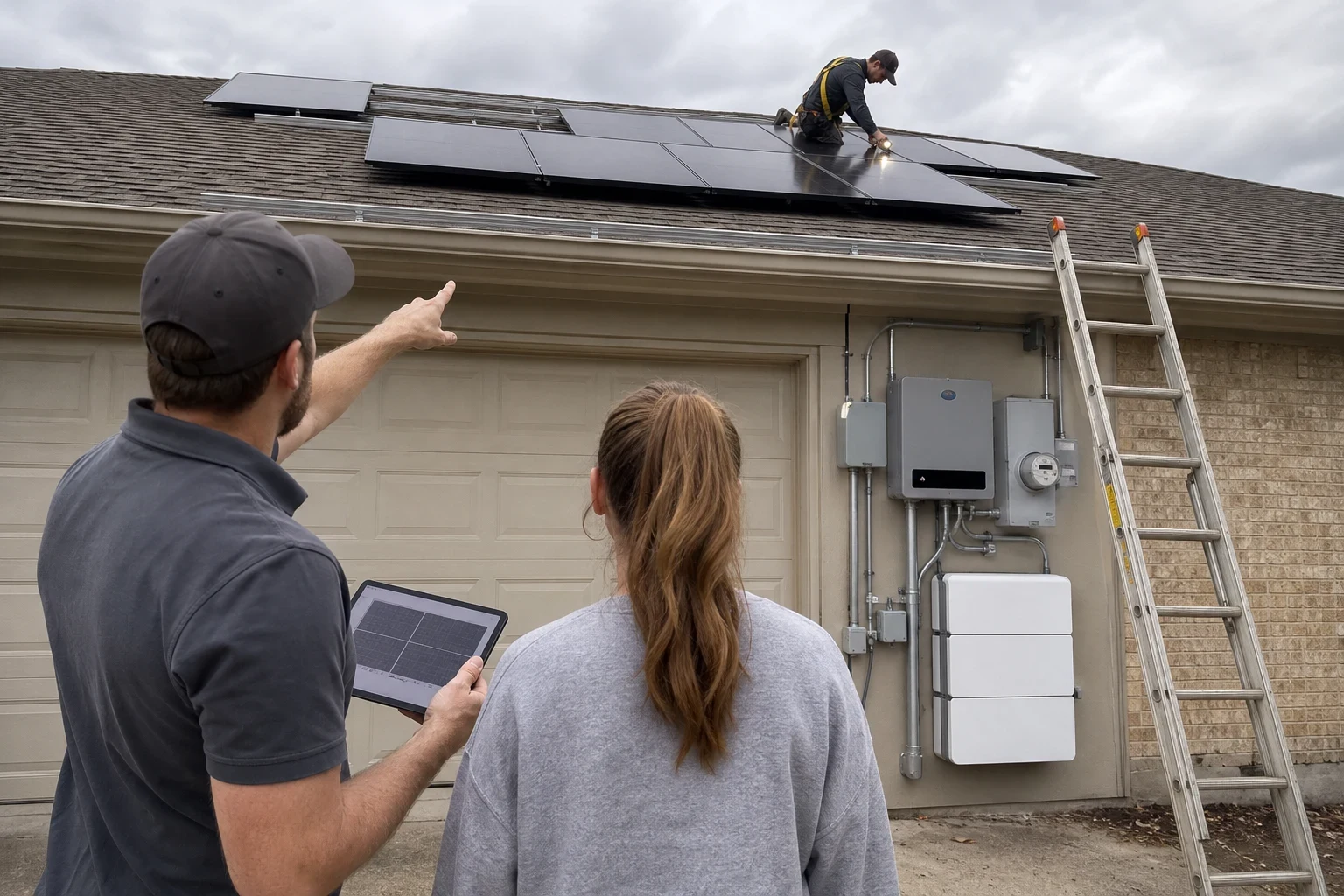
- Water stains below the array
- A brown ring on the ceiling under your panels usually points to a failed seal or a flashing that was never installed. Catching it early often means resealing one or two mounts.
- Panels that shift or rattle
- If a panel moves when the wind picks up, a clamp has loosened or a lag bolt has backed out of the rafter. We retorque or re-anchor it.
- Cracked or brittle sealant
- Exposed sealant around mount bases dries and splits after a few hot seasons. Fresh sealant plus proper flashing stops the problem at its source.
- Sagging rails or bent hardware
- Hail and high wind can bend rails or crack clamps. Bent parts get replaced individually; the panels can usually stay.
- You are planning a new system
- If you want solar and have a sound roof with good sun exposure, roof mounting is often the simplest way to use space you already own.
Steps in a Roof-Mounted Job
- 1
Inspect the roof and attic
We check the roofing material, look at the decking from inside the attic and note rafter spacing. If the roof is nearly worn out, you hear it from us before any mount is set, since taking an array down later costs more.
- 2
Plan and permit
We lay out the array, work out mount spacing for wind load, and take care of the city permit and the utility interconnection forms.
- 3
Installation day
Our crew puts down attachments and flashing first, followed by rails, then panels and wiring. We keep debris out of your gutters and collect metal shavings and scraps before leaving.
- 4
Inspection and switch-on
Once the city inspection passes and the utility signs off, we start up the system and show you how to read what it produces.
What Moves the Cost
Roof-mounted pricing depends more on the roof than on the panels. We walk you through each item on a written, line-item estimate by phone or after the site visit. For existing arrays, a targeted repair is priced separately from any replacement so you can compare.
- Roof material
- Shingle mounts are the quickest. Tile takes longer because tiles must be lifted, cut or swapped out, and metal seam clamps vary by seam profile.
- Pitch, height and access
- Steep or two-story roofs need more fall protection and time on the roof.
- Number of roof planes
- An array split across several planes needs more rails, more attachments and more wiring runs than one large plane.
- Existing array condition
- Resealing or reflashing a few mounts costs far less than removing and reinstalling the array. We tell you which one your roof actually needs.
Roof-Mounted Solar Questions
- Will drilling into my roof cause leaks?
- Not when the attachment is flashed and lagged into a rafter. Leaks come from bolts that miss the rafter or mounts that rely on sealant alone. We flash every shingle penetration and seal the bolt as a second layer.
- My panels are already up and one area leaks. Do I need a new system?
- Usually not. Most leaks trace to one or two mounts with failed sealant or missing flashing. We pull the nearby panel, fix the attachment and reset it. If the rails or hardware are badly corroded or undersized, we explain why replacement makes more sense.
- Does my roof need to be replaced before I add solar?
- Only if it is near the end of its service life. We check the shingles and decking first. We do not do roofing, so if the roof needs work, we will say so and plan the array after it is done.
- How do the mounts hold up to hail and wind?
- Attachment spacing is calculated for wind load, and the rails tie the panels together so loads spread across many anchors. After a hail storm, we can inspect for bent rails or cracked clamps and replace only the damaged parts.
- Can you mount on a tile or metal roof?
- Yes. Tile gets hooks that pass beneath the tile, and standing seam metal gets clamps that grip the seam without drilling, which keeps the roof surface intact.
Get a Straight Answer About Your Roof Mounts
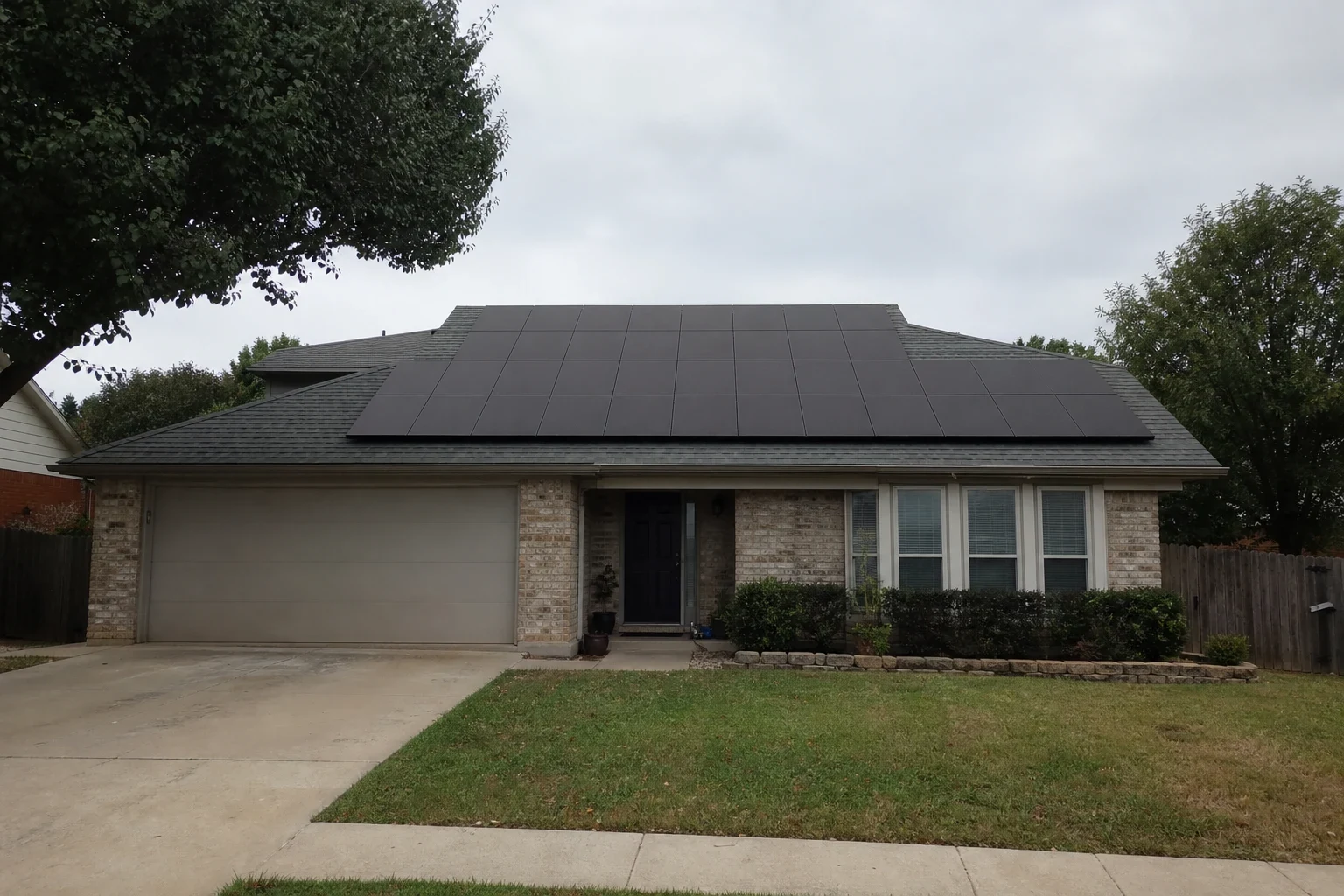
Tell us about your roof or the array you already have. We will explain whether a repair, an adjustment or a new layout fits, and why.